Co-Delivering Health Campaigns: Effective, Acceptable and Feasible in Ethiopia
Authors: Zewdie Birhanu1,2, Morankar Sudhakar1,2, Gelila Abraham1,2, Gebeyehu Bulcha3, Teshome Shiferaw3, Dhaba Abdissa1, Hirpha Miecha4, Nimona Berhanu1, Firanbon Teshome1, Yohannes Kebede1
1. Institute of Health, Jimma University, Jimma, Ethiopia
2. JBI Ethiopian Evidence Synthesis, Translation and Implementation Center
3. Jimma Zonal Health Office, Oromia, Ethiopia
4. Oromia Health Bureau, Oromia, Ethiopia
Introduction
Neglected tropical diseases, or NTDs, affect millions of people worldwide, causing illness, disability and economic hardship. The World Health Organization has set ambitious goals to dramatically reduce deaths from these diseases and ensure more people receive treatment by 2030.[1] One key strategy to achieve this is integrating health campaigns, so that multiple interventions, such as preventive medications, health education and sanitation promotion, can be delivered together. By combining efforts, health programs can reach more people, use resources more efficiently and achieve better health outcomes.[1,2]
Background
In Ethiopia, two major health campaigns target specific NTDs: onchocerciasis, also known as river blindness, and soil-transmitted helminths, or intestinal worms. For onchocerciasis, community volunteers distribute a medicine called ivermectin twice a year to everyone over 5 years old.[3,4] Meanwhile, deworming for intestinal worms is conducted in schools for children aged five to 15 years, using albendazole or mebendazole. [2,5] More recently, the deworming program has expanded to include women of reproductive age, a group previously not covered. Although these campaigns aim to protect communities, they are mostly delivered separately—at different times, in different locations and by different groups of health workers. Supportive interventions, such as promoting clean water and sanitation, educating communities about health behaviours and following up with children who missed vaccinations are also not well aligned. Evidence shows that giving ivermectin and albendazole or mebendazole together is safe and may even have synergistic effects and the World Health Organization has approved co-administration during mass campaigns.[7–9] Recent research in Ethiopia has explored combining these medicines with other health interventions at the village level, bringing together logistics, staff and communication into a single, coordinated plan.
The problem
Despite recommendations to integrate health campaigns, most programs in Ethiopia still run in isolation, which can have significant disadvantages. Delivering campaigns separately creates a burden on the health system, with duplicated logistics, increased costs and inefficient use of supplies. Health workers face higher workloads, spending more time planning, coordinating and traveling to implement multiple campaigns independently. For community members, repeated visits, multiple messages and different locations can cause confusion, fatigue and reduced participation. This fragmented approach reduces the overall impact of health programs, limits the reach of interventions and contributes to inequities—some people may receive care from one campaign but miss others. Even though Ethiopia has taken small steps toward integration, such as joint training for health workers and shared reporting formats, campaigns are still largely planned at national and regional levels and delivered vertically, without actual co-administration of medicines that could safely be combined (for example, onchocerciasis and intestinal worm treatments). Supportive activities, including sanitation, hygiene and immunisation follow-ups, are often poorly coordinated.[2] Addressing these gaps is crucial to achieve national targets, such as treating at least 75% of people for intestinal worms and 80% for onchocerciasis and to make meaningful progress towards eliminating these diseases by 2030.[2]
The search for answers
To answer whether combining multiple health campaigns is effective, acceptable and feasible, researchers in Ethiopia employed a participatory implementation research approach.[10–12] Detailed methodology and process information are available here: Co-delivery of Preventive Chemotherapies Research Project. This means the study did not just test an idea in theory, but worked closely with communities, health workers and decision-makers to design and deliver real-world solutions. The process began with formative research—focus groups, interviews and household surveys—to understand people’s needs, perceptions, opportunities and possible challenges for integration. Using this evidence, researchers co-designed the integration strategy with key stakeholders, including frontline health workers, local leaders, campaign staff and community members. Together, they built capacity, developed harmonized training and education materials and created village-level microplans. The integrated campaign brought together two mass drug administrations (for river blindness and intestinal worms) and three supportive activities (health education on sanitation and COVID-19 and linking children who missed vaccinations). Medicines were co-delivered safely at the same time, following World Health Organization guidance. Finally, the team evaluated the results using surveys, interviews and monitoring tools. They measured treatment coverage, changes in knowledge and practices and community and stakeholder perceptions of feasibility, acceptability and sustainability. This evidence now helps demonstrate the impact of co-delivery and informs how future health campaigns can be more effective and efficient.
Results
The integrated campaign showed promising outcomes for both communities and the health system.
Improved knowledge and practices: Community understanding of the target diseases and their prevention increased significantly. Knowledge that blackflies cause river blindness rose by 20%, awareness that ivermectin treats it improved by 30.1% and recognition that soil and faecal contact transmits intestinal worms increased by 13%. Handwashing practices also improved: before meals (32.8%), after using the toilet (31.7%) and after touching soil (14.1%).
Better health service linkages: The co-delivery approach helped identify and refer 337 unvaccinated children under 1 year (12.7%) for vaccination. At the same time, nearly all respondents (98.9%) expressed willingness to receive the COVID-19 vaccine, showing strong community openness to integrated health services.
High treatment coverage and safety: Treatment coverage reached 89.5% for onchocerciasis, 84.1% for soil-transmitted worms and 83.2% for combination therapy (ivermectin with albendazole or mebendazole). Reported adverse events were negligible, highlighting that integration was safe. Yet, the research also uncovered reasons behind small discrepancies between reported coverage and household survey data. As one health extension worker explained, ‘In my team when many people come at the same time, there are situations where registration process is affected to some extent because of the overcrowding.’ This highlights how logistical challenges at delivery sites can influence reporting accuracy, despite strong overall performance.
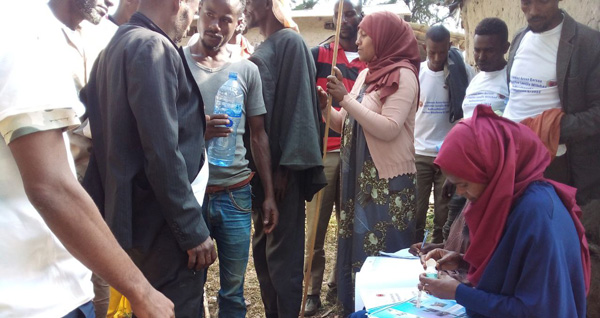
High satisfaction and future acceptance: Most community members were satisfied with the approach (91.6%) and intended to accept co-delivery in the future (96.3%). A focus group participant explained why trust in health extension workers was central to this acceptance: ‘The community is really happy to take the drugs from extension health workers than from Gare leaders, as the health workers have a good understanding of the drugs. The community accepts the information transmitted by health workers. The health workers also advise the community very well. They have also a high network with the community.’ This trust was key in ensuring transparency, fairness and equity in drug distribution.
Stakeholder perspectives: Frontline health workers and campaign organisers reported multiple advantages compared to single campaigns: improved access and equity, more efficient drug use, higher treatment quality and stronger documentation and reporting systems. One key informant interview highlighted the reduced misuse and greater fairness in distribution: ‘It has reduced the existing waste by 100%. The program is very interesting; the people … liked it very much because, when the Gares distribute the drug, they won't give it to those individuals they have grudged or are in dispute. Many community members have been complaining about this issue. We loved it, even we wish we could implement more expansion and improvements in the upcoming round than this round.’ These results shows how integration not only improved efficiency, but also strengthened community trust and reduced conflicts sometimes seen in previous mass drug distribution models.
Challenges and lessons learned
Challenges: Some community drug distributors felt sidelined, leading to reluctance to engage. Aligning multiple vertical campaigns backed by different partners was also complex, requiring stronger coordination and role clarity.
Promising practices: Empowering frontline health workers built trust, fairness and transparency. Community trust in health workers boosted participation. Strong district leadership improved coverage and fidelity. Integrated communication and co-created tools smoothed implementation. Prior household registration enhanced logistics, reporting and community trust.
Lessons learned: Ethiopia’s health system and communities are open to integration when complementary services are included. Success depends on partner alignment, managing volunteer roles, participatory micro-planning and continuous community mobilization.
Next steps
The co-delivery of health campaigns in Ethiopia—led by health extension workers and supported by communities—proved effective, acceptable and feasible, achieving strong treatment coverage and community trust. This approach holds promise for advancing national and global targets for NTD prevention. Next steps include adopting and scaling up the strategy across additional districts with ongoing monitoring, strengthening collaboration through a common platform for health campaign actors at the primary health care unit level, re-orienting community drug distributors as mobilizers to boost trust and participation and conducting further research on cost-effectiveness, epidemiological impact and engagement strategies in both rural and urban settings.
Key take-home messages
The success of Ethiopia’s co-delivery strategy shows that integrating multiple health campaigns is not only feasible, but also more effective and acceptable than siloed approaches. In regions where several campaigns run in parallel, co-delivery can reduce inefficiencies, ease pressure on health systems and build stronger trust with communities. With adaptation to local contexts, this model offers a pathway for countries to improve coverage, equity and sustainability in their fight against neglected tropical diseases and other public health priorities.
References
World Health Organization (WHO). (2020). Ending the neglect to attain the Sustainable Development Goals: A road map for neglected tropical diseases 2021–2030. Geneva: World Health Organization. Licence: CC BY-NC-SA 3.0 IGO.
Ministry of Health (MOH) Ethiopia. (2021). The Third National Neglected Tropical Diseases Strategic Plan 2021–2025 (2013/14–2017/18 E.C.). Addis Ababa, November 2021.
Atun, R. A., Bennett, S., & World Health Organization Regional Office for Europe, Health Evidence Network, European Observatory on Health Systems and Policies. (2008). When do vertical (stand-alone) programmes have a place in health systems? World Health Organization. Regional Office for Europe. https://apps.who.int/iris/handle/10665/107977
Ministry of Health (MOH) Ethiopia. (2016). Guidelines for onchocerciasis elimination in Ethiopia. Addis Ababa. https://www.cartercenter.org/resources/pdfs/news/health_publications/river_blindness/onchocerciasis-elimination-certification-guidelines-ethiopia.pdf
Maddren, R., Phillips, A., Ower, A., et al. (2021). Soil-transmitted helminths and schistosome infections in Ethiopia: A systematic review of progress in their control over the past 20 years. Parasites & Vectors, 14(97). https://doi.org/10.1186/s13071-021-04600-0
Centers for Disease Control and Prevention (CDC). (2020). Ethiopia measles vaccination campaign during COVID-19 pandemic. Global Immunization. https://www.cdc.gov/globalhealth/immunization
Patel, C., et al. (2019). Efficacy and safety of Ivermectin and Albendazole in school-aged children and adults. BMC Infectious Diseases, 19(262).
https://doi.org/10.1186/s12879-019-3882-x
El-Tahtawy, A., et al. (2008). The effect of Azithromycin on Ivermectin pharmacokinetics—A population pharmacokinetic model analysis. PLoS Neglected Tropical Diseases, 2(5), e236. https://doi.org/10.1371/journal.pntd.0000236
World Health Organization (WHO). (2021). Safety in administering medicines for neglected tropical diseases. Geneva: World Health Organization. Licence: CC BY-NC-SA 3.0 IGO.
Gaglio, B., Shoup, J. A., & Glasgow, R. E. (2013). The RE-AIM framework: A systematic review of use over time. American Journal of Public Health, 103(6), e38–e46. https://doi.org/10.2105/AJPH.2013.301299
Dunton, G. F., Lagloire, R., & Robertson, T. (2009). Using the RE-AIM framework to evaluate the statewide dissemination of a school-based physical activity and nutrition curriculum: ‘Exercise Your Options.’ American Journal of Health Promotion, 23(4), 229–232. https://doi.org/10.4278/ajhp.071120121
Jilcott, S., Ammerman, A., Sommers, J., & Glasgow, R. E. (2007). Applying the RE-AIM framework to assess the public health impact of policy change. Annals of Behavioral Medicine, 34(2), 105–114. https://doi.org/10.1007/BF02872666
Links to additional resources
Health Campaign Effectiveness Coalition (HCE). (n.d.). Research project on co-delivery of preventative chemotherapies against onchocerciasis and soil-transmitted helminths. Detailed project profile available at: https://campaigneffectiveness.org/research_project/co-delivery-of-preventative-chemotherapies-against-onchocerciasis-and-soil-transmitted-helminths/#:~:text=The%20co%2Ddelivery%20of%20onchocerciasis,delivery%20of%20NTD%20interventions%20include
Abdissa, D., Kebede, Y., Morankar, S., Abraham, G., Bulcha, G., Shiferaw, T., Berhanu, N., Teshome, F., Miecha, H., & Birhanu, Z. (2024). Effectiveness of integrated social and behavior change communication interventions in mass drug administration campaigns in enhancing knowledge, perceptions and preventive practices for neglected tropical diseases in Jimma. Risk Management and Healthcare Policy, 17, 2331–2357. https://doi.org/10.2147/RMHP.S468390. https://pubmed.ncbi.nlm.nih.gov/39371937/
Abdissa, D., Kebede, Y., Sudhakar, M., Abraham, G., Bulcha, G., Shiferaw, T., Berhanu, N., Teshome, F., Miecha, H., & Birhanu, Z. (2024). Community's knowledge, perceptions and preventive practices on onchocerciasis in Jimma zone, Ethiopia: Formative mixed study. PLoS Neglected Tropical Diseases, 18(3), e0011995. https://doi.org/10.1371/journal.pntd.0011995. https://pubmed.ncbi.nlm.nih.gov/38478481/
Abdissa, D., Kebede, Y., Sudhakar, M., Abraham, G., Bulcha, G., Shiferaw, T., et al. (2024). Communities’ knowledge, perceptions and preventive practices on soil-transmitted helminths in Jimma, Oromia, Ethiopia: Formative mixed study. PLoS Neglected Tropical Diseases, 18(9), e0012483. https://doi.org/10.1371/journal.pntd.0012483
To link to this article - DOI: https://doi.org/10.70253/PCVT8290
Disclaimer
The views expressed in this World EBHC Day Blog, as well as any errors or omissions, are the sole responsibility of the author and do not represent the views of the World EBHC Day Steering Committee, Official Partners or Sponsors; nor does it imply endorsement by the aforementioned parties.