NUEBE and JBI Brazil celebrate advances in evidence implementation
Author: Karina Sichieri1; Fernanda Ayache Nishi1; Ana Paula Almeida Brito1; Luciana Ogawa1; Vilanice Alves de Araújo Puschel2; Juliana Rizzo Gnatta2
- 1. University of São Paulo University Hospital. JBI Brazil Core Staff
- 2. University of São Paulo School of Nursing. JBI Brazil Core Staff
Introduction
The Evidence-Based Nursing Center (NUEBE) of the University Hospital of the University of São Paulo (HU-USP), the School of Nursing of the University of São Paulo (EEUSP) and the JBI Brazilian Center for Evidence-Based Healthcare are joining the global movement to celebrate World Evidence-Based Healthcare Day 2025, which this year has the theme ‘Communication and Collaboration in Knowledge Translation’. This day invites reflection on how effective communication and collaborative work among multidisciplinary teams are pillars for implementing scientific evidence into safe and sustainable practices, thereby bridging the gaps between theory and clinical practice. This approach promotes safety and quality of care, continuous learning and the building of an organizational culture based on trust and mutual respect.
At the HU-USP Emergency Department, the implementation of a collaborative project between the medical and nursing teams enables systematic pain management in trauma patients. Today, assessments are performed by the nursing team, supported by a multidisciplinary pain management protocol. Professionals reported that the protocol provided greater safety and clarity, facilitating pain management and integrated analgesic administration, ensuring more effective patient care.
By participating in this mobilization, NUEBE and JBI Brazil reaffirm their commitment to bringing research closer to clinical practice and supporting healthcare professionals in implementing changes in healthcare services that promote advances in care.
Background
The HU-USP has partnered with JBI Brazil since 2009, positioning itself as a national benchmark in evidence-based implementation. In 2013, NUEBE was established to promote evidence-based clinical decision-making, encouraging staff to question established routines and develop protocols based on the best available evidence.
Since 2016, JBI Brazil has offered the Evidence Implementation Training Program (EITP), training HU-USP professionals to implement evidence and develop clinical leadership skills. In 2019, HU-USP received the status of a JBI Endorsement Organisation, in recognition of the institution's commitment to providing care based on the best evidence. JBI’s Evidence-Based Practice Database can be accessed from all hospital computers, enhancing bedside decision-making for professionals, students and residents.
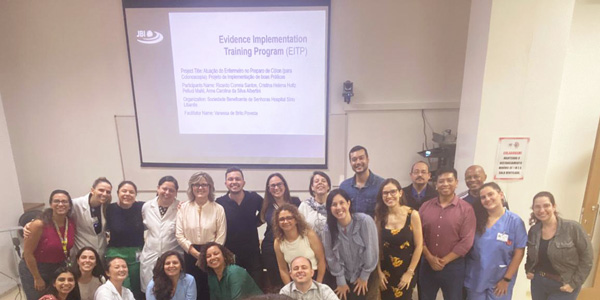
Professionals at the hospital emphasise that this recognition reflects both the collective effort and the impact of the initiatives implemented: the importance of using public resources in the best possible way, the scope of the projects that involve all areas of the hospital and the importance of training students with a differentiated perspective on clinical practice.
To strengthen the clinical leadership of the professionals and expand the development of implementation projects at the multidisciplinary and organisational levels, JBI Brazil, with the support of NUEBE/HU-USP, received funding from the JBI Collaboration Brighter Futures Grants Program 2023–2024. This program funds activities and projects developed by JBI Collaboration Entities that further JBI's mission of expanding and supporting evidence-based healthcare.
Result/outcome
Through this initiative, ten healthcare professionals received training in the Evidence Implementation Training Program, becoming clinical leaders prepared to drive sustainable changes in healthcare practice and promote the adoption of evidence-based practices in their daily services. Among the participants, nine nurses and one physician were trained, all engaged in developing projects that actively involved multidisciplinary teams, ensuring the integration of diverse knowledge and skills in the implementation process.
Participants reported that the course methodology was beneficial in their daily practice, as it guides evidence-based practice in a cyclical, easy-to-understand and easy-to-implement manner. Furthermore, observing the implementation of best practice protocols and changes in clinical practice reinforced the importance of working interprofessionally, seeking better patient outcomes and contributing to excellence in care.
Among the projects resulting from this funding, the following initiatives stand out:
- Pain assessment: Verbal adults in the Emergency Department;
- Liver biopsy: Postoperative care
- Post- surgery (adults): Pain management
- Pain assessment (children and adolescents): Assessment tools
- Preterm neonates (discharge): Family readiness facilitation
- Post-operative pulmonary complications: Post-operative strategies
In each initiative, collaborative communication was crucial. In the project on pain management after surgery and in the emergency department, for example, joint meetings helped align perspectives between the nursing and medical teams, reducing resistance and favoring protocol adoption. In the project with premature newborns, the development of discharge preparation tools also involved input from families and the multidisciplinary team, making the materials more accessible and valuable.
Among the main achievements are the development of care protocols in collaboration with the multidisciplinary team, professional training on the relevant topics, the development and validation of tools to enhance work processes and the creation of informative posters and educational videos. These integrated actions helped align care practices with the best available evidence, promote team engagement and consolidate an organisational culture of continuous improvement and innovation in healthcare. A concrete example was the development of an information leaflet on post-operative pain, which was distributed to patients undergoing elective surgery. This material was developed through meetings and discussions between the post-operative pain project team and the outpatient team, ensuring that the content was relevant, clear and valuable to both providers and patients.
As a milestone in the completion of the EITP, the VII ENIES – National Meeting on Evidence Implementation in Health Institutions was held, bringing together professionals to share experiences and the results of evidence implementation projects. The event, available online (Day 1 | Day 2), became a platform for dialogue, learning and the dissemination of best practices.
The project results are currently being submitted for publication in JBI Evidence Implementation and demonstrate that strengthening clinical leadership, combined with collaborative communication between multidisciplinary teams, has a direct impact on the quality and safety of patient care.
Challenges and lessons learned
Implementing the projects presented some challenges, including:
- Time availability: Balancing care activities and project participation required organisational flexibility and management support.
- Multidisciplinary integration: Integrating teams from different areas required efforts to align, communicate and define responsibilities.
- Resistance to change: Some professionals demonstrated difficulty in modifying established routines, reinforcing the importance of communication and involvement from the planning stage.
- Adaptation of protocols and educational materials: Ensuring that tools, posters and videos were relevant and easy to use for everyone on the team.
Next steps
- Publication of results in the JBI Evidence Implementation journal for scientific dissemination and sharing of best practices.
- Scheduling periodic audits to ensure the sustainability and maintenance of changes promoted by evidence implementation projects.
- Ongoing training of professionals, including the incorporation of new participants into the Evidence Implementation Training Program, to consolidate skills in clinical leadership and evidence implementation.
Key take-home messages
- Clinical leadership and collaborative communication among multidisciplinary teams are essential for implementing evidence into clinical practice.
- The joint development of protocols, team training and educational materials promotes engagement, safety and quality of care.
- Evidence implementation projects require planning, ongoing monitoring and leadership support to overcome challenges.
References
Sichieri K, Garcia PC, Nishi FA, Brito APA, Ogawa L, Maia FOM, et al. Searching for care excellence in a Brazilian University Hospital: The Evidence-Based Nursing Nucleus. Glob Implement Res Appl. 2023;3:380–9. https://doi.org/10.1007/s43477-023-00109-z24.
Links to additional resources
https://jornal.usp.br/universidade/hospital-da-usp-recebe-selo-internacional-unico-na-america-latina/
https://www.youtube.com/watch?v=hnO6jS-B7jw
https://www.youtube.com/live/gh_mCmSIW_4
To link to this article - DOI: https://doi.org/10.70253/IUQS5449
Disclaimer
The views expressed in this World EBHC Day Blog, as well as any errors or omissions, are the sole responsibility of the author and do not represent the views of the World EBHC Day Steering Committee, Official Partners or Sponsors; nor does it imply endorsement by the aforementioned parties.