AI in Philippine Healthcare: Who Is Keeping Watch?
Author: Dr Jeriel De Silos1,2
1. De La Salle Medical and Health Sciences Institute
2. JBI De La Salle Committee on Evidence Synthesis
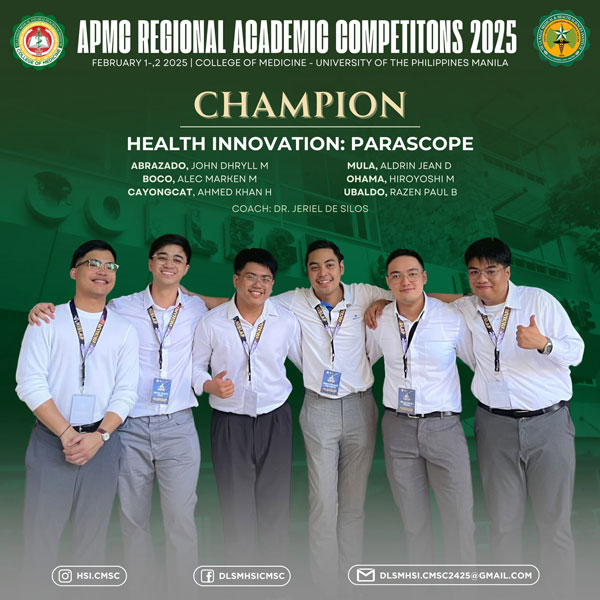
In 2025, I was invited to become a mentor of a team of medical students who would later compete in a health innovation pitch here in the Philippines. The goal of said competition is to invite students to think of innovative ideas on how to address a specific healthcare problem in the Philippines. This team’s idea is to build a 3D-printed modular smartphone microscope to look for parasites and ova from stool samples. Their reason for proposing this is because the standard light microscopes are too expensive as an investment for financially constrained local health facilities in rural areas of the Philippines. Building a modular and 3D-printed smartphone microscope is more accessible because anyone with a 3D printer can supply the necessary parts to a health facility, and anyone with a capable smartphone can run the microscope, even in the absence of training as a medical technologist. The idea is to obtain images directly from the smartphone and use AI remotely for the initial identification of any parasites from the sample. The hardware needed is available, and we have a machine learning expert who is also onboard. But there is a problem, and that is the lack of availability of a dataset of images of endemic parasites from select communities in the Philippines. Another problem that the team might encounter in the future is in terms of scaling up. While the technology is good on paper, there is no guarantee that under-resourced local communities in the Philippines will adopt the innovation. Potential barriers are a lack of necessary hardware, poor internet connectivity, and the absence of an AI model based on local parasite data from these areas. Today, the team is developing a solution that is way ahead of the conditions needed to make it operational.

Figure 1: Parascope (proposed 3D-printed smartphone microscope) attached to a smartphone
AI is Already Here – Whether We Are Ready or Not
Artificial intelligence (AI) is no longer a future concern for health systems. AI-powered tools are already being used to support clinical decisions, automate administrative tasks, and generate health information for patients and communities. In evidence-based healthcare, AI is transforming how evidence is produced, synthesised, and used, from automated screening tools for systematic reviews to AI-generated clinical guidelines.
For the Philippines, a country with a severe shortage of specialist clinicians, a fragmented health information system, and wide geographic disparities in access to care, this holds genuine promise. But promise without accountability is a risk. And right now, the Philippines has very little of the governance infrastructure needed to ensure that AI in health is used with integrity, transparency, and accountability.
A Governance Gap, Not Just a Technology Gap
When people talk about barriers to using AI in Philippine healthcare, the conversation often turns quickly to infrastructure – that is, the lack of electronic health records, poor internet connectivity in rural areas, and underfunded local government units. These are real problems, and they are accompanied by a deeper issue: the absence of a governance framework that sets clear rules for how AI can and cannot be used in health settings.
The Responsible use of AI in Evidence Synthesis (RAISE) recommendations for responsible AI in evidence synthesisand the Guidelines International Network (GIN) principles for AI use in the health guideline enterprise are both unambiguous on one point: humans must remain ‘in the loop’ and ultimately responsible for AI-assisted decisions. In the Philippine context, this principle is difficult to uphold when the governance structures that would assign and enforce that responsibility simply do not exist.
When the team of medical students pitched their idea to me, one of their concerns was whether the inclusion of an AI-based application would discourage the judges and potential funding agencies. They felt that associating their product with the term AI might have negative connotations or lead it to sound ‘too good to be true’. The students also feared that ethical clearance might not be granted because AI tools’ training on anonymised local data does not yet have a national guiding principle. Because of the absence of an overall governing framework outlining the benefits and risks, as well as defining the guiding principles and safeguards for AI-based technologies and solutions, AI innovations in the Philippines can be stigmatised even before they are demonstrated to potential investors.
Bias, Integrity, and the Philippine Context
Governance matters, especially given the potential for algorithmic bias. This is a concern that hits particularly hard in low- and middle-income countries (LMICs) like the Philippines.
A 2024 study in Nature Communications found that AI models developed in high-income countries performed significantly worse when deployed in LMIC hospital settings. The reason was because these models were built on data that do not reflect the populations, disease burdens, or clinical environments of countries like the Philippines. When a biased model is deployed without local validation, it can underperform, and even worsen health outcomes, particularly for populations that are already marginalised. A 2024 analysis of health datagovernance in low-resource settings found that the absence of clear governance frameworks not only limits AI performance but also creates conditions where informed consent, data privacy, and equity can all be compromised simultaneously.
These concepts are key to the success of the medical students’ proposed innovations. The parasitic diseases that they want to address are no longer major problems in other countries, which means the data needed for AI training might not exist outside the Philippines. Therefore, the team has no choice but to consider logging local data from preserved microscope slides and micrographs in its own pathology laboratory.
What Good Governance Actually Looks Like
The good news is that we do not need to start from scratch. Global frameworks, including the World Health Organization (WHO) Global Initiative on AI for Health (GI-AI4H), provide a foundation for member states to build ethical, accountable AI governance in health. Moreover, the joint position statement on AI in evidence synthesis from Cochrane, the Campbell Collaboration, JBI and the Collaboration for Environmental Evidence offers practical principles for maintaining research integrity as AI tools enter the evidence pipeline.
The Philippines does not need to invent a governance framework from scratch. Instead, it can adapt these frameworks to its context, one informed by decentralisation, resource constraints, and significant inequality, and then enforce them.
Lessons Learned
Other LMICs that have moved quickly on digital health adoption without adequate governance have paid a price in wasted investment, public mistrust, and real patient harm. The Philippines has an opportunity to learn from these experiences rather than repeat them. The lesson is not that AI should be avoided. It is that the speed of adoption must be matched by the speed of governance development. Technology that moves faster than accountability is not progress, but rather, a risk. It is, therefore, important to formulate a working AI governance framework that will be applicable to the Philippine context. At the national level, this must be created so that all sectors in Philippine society have a guiding principle to follow on how everyone can utilise and explore AI use in areas like healthcare and research. In an academic and research setting, it is important to develop an institutional AI governance framework that will dictate how academics, researchers, and staff members gain the necessary AI literacy, and how we can ensure that humans always remain in control and provide the necessary context and decisions for any research and innovation that involves AI use. For research mentors who are advising students about their AI-based solutions, it is always important to ground their work with a ‘human-in-the-loop’, especially in the absence of a governing policy or framework. This will steer institutional administrators on how to appraise AI tools and which assets (including hardware and software) are worthy investments for an institution.
In my experience as a health innovation mentor, rather than focusing on technology alone in the team’s proposal, we ultimately included the creation of a centralised data warehouse of parasite micrographs. The team also recommended the creation of a policy that will institutionalise the development of an AI system, which will continuously process and learn from the micrographs in the proposed data warehouse, while ensuring that ethical safeguards are in place during data collection, and that patient confidentiality and data security are considered in all associated processes. Underscoring this proposal is the idea that technological innovations involving AI will only be useful, ethical, and scalable if a functional governance framework is established, which is followed in all work to implement AI.
Thanks to this considerate approach, our team succeeded in winning the Philippine health pitch competition!
Key Messages
- The Philippines urgently needs a national AI governance framework for health that sets clear standards for validation, accountability, transparency, and equity
- Global frameworks already exist, but they need to be contextualised. The RAISE recommendations, GIN principles, and WHO GI-AI4H framework provide ready-made starting points that can be adapted to the Philippine context
- Keeping people at the centre of AI means assigning clear human responsibility. Clinicians, patients, and communities cannot meaningfully trust AI tools if no one is formally accountable for their integrity and performance
References
Flemyng, E., Noel-Storr, A., Macura, B., Gartlehner, G., Thomas, J., Meerpohl, J. J., Jordan, Z., Minx, J., Eisele-Metzger, A., Hamel, C., Jemioło, P., Porritt, K., & Grainger, M. (2025). Position statement on artificial intelligence (AI) use in evidence synthesis across Cochrane, the Campbell Collaboration, JBI, and the Collaboration for Environmental Evidence 2025. JBI Evidence Synthesis, 23(11), 2162–2166. https://doi.org/10.11124/JBIES-25-00480
Harasgama, S., Pearce, H., Appel, C., Loftus, L., Painter, H., Kuhn, I., Karpusheff, J., Ceesay, A., & Ford, J. (2026). Artificial intelligence tools for automating evidence synthesis: Scoping review. Journal of Medical Internet Research, 28(1), e81597. https://doi.org/10.2196/81597
Li, T., Wandella, A., Gomer, R., & Al-Mafazy, M. H. (2024). Operationalizing health data governance for AI innovation in low-resource government health systems: A practical implementation perspective from Zanzibar. Data & Policy, 6, e63. https://doi.org/10.1017/dap.2024.65
Muralidharan, V., Ng, M. Y., AlSalamah, S., Pujari, S., Kalra, K., Singh, R., Schalet, D., Olantuji, T., Malpani, R., Matin, R. N., Omiye, J. A., Zhao, Y., Sands, A., Reis, A., Diaz Mendoza, J. E., Hernandez-Boussard, T., Daneshjou, R., & Labrique, A. B. (2025). Global Initiative on AI for Health (GI-AI4H): Strategic priorities advancing governance across the United Nations. npj Digital Medicine, 8(1), 219. https://doi.org/10.1038/s41746-025-01618-x
Sousa-Pinto, B., Marques-Cruz, M., Neumann, I., Chi, Y., Nowak, A. J., Reinap, M., Awad, M., Nothacker, M., Trucl, M., Brozek, J., Alonso-Coello, P., Wiercioch, W., Qaseem, A., Akl, E. A., Schünemann, H. J., & 2024 Board of Trustees of the Guidelines International Network. (2025). Guidelines International Network: Principles for use of artificial intelligence in the health guideline enterprise. Annals of Internal Medicine, 178(3), 408–415. https://doi.org/10.7326/ANNALS-24-02338
Yang, J., Dung, N. T., Thach, P. N., Phong, N. T., Phu, V. D., Phu, K. D., Yen, L. M., Thy, D. B. X., Soltan, A. A. S., Thwaites, L., & Clifton, D. A. (2024). Generalizability assessment of AI models across hospitals in a low-middle and high income country. Nature Communications, 15(1), 8270. https://doi.org/10.1038/s41467-024-52618-6
To link to this article - DOI: https://doi.org/10.70253/GXLC4042
Disclaimer
The views expressed in this World EBHC Day Blog, as well as any errors or omissions, are the sole responsibility of the author and do not represent the views of the World EBHC Day Steering Committee, Official Partners or Sponsors; nor does it imply endorsement by the aforementioned parties.