Beyond the Evidence: Professional Judgement in the Age of Artificial Intelligence
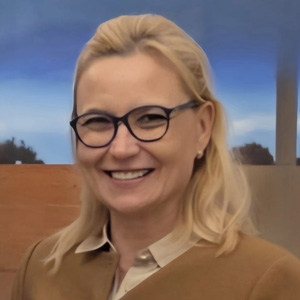
Author: Mariana Zazu1,2,3
1. The Order of Nurses, Midwives and Medical Assistants in Romania
2. JBI Romanian Evidence-Based Health Services Management
3. Carol Davila University of Medicine and Pharmacy
Artificial intelligence (AI) has transformed the way healthcare professionals search for information and use it to inform clinical decisions. Questions that once required time to search databases, read articles and compare recommendations can now be answered in a matter of seconds. However, finding an answer is not enough.
I believe that what really matters is whether an answer found so easily with the help of AI can support a good clinical decision. Finding an answer and making a good decision are two different but complementary things.
Evidence-based healthcare does not simply mean finding a recommendation and applying it. The work begins when we understand what the evidence means in a specific clinical context and determine how it can be used to improve care. What we do after obtaining this information with the help of AI is even more important: we assess the quality of the evidence, interpret it in the relevant clinical context and consider what it means for the person receiving healthcare. Even if an AI-generated response appears clear and convincing, it may be incomplete, based on outdated or inappropriate sources or simply wrong. The response always depends on how we formulate the question and on the information on which the system bases its answer.
The World Health Organization guidance on artificial intelligence for health highlights these risks, including the possibility that AI may generate inaccurate or biased information, as well as the need for transparency, appropriate governance and human oversight. To reduce these risks, healthcare professionals need specific skills to use AI appropriately when searching for and evaluating information: formulating clinical questions, checking sources, assessing the quality and relevance of the evidence, recognising uncertainty and identifying situations in which an answer requires further investigation. In fact, these are fundamental principles of evidence-based practice.
Evidence Is Only One Part of the Decision
The JBI Model of Evidence-Based Healthcare, which I use in my workplace, supports evidence-based decision-making at the intersection of the best available evidence, professional judgement and expertise, patient values and the context in which healthcare is provided. None of these elements can function in isolation. Even when a recommendation is based on high-quality evidence, its application must be considered in relation to each patient’s situation. Comorbidities, previous experiences, concerns about treatment and personal priorities can influence the decision. Therefore, evidence must be weighed against what matters to the patient. Plus, as patients increasingly use artificial intelligence to access health information, we must consider how this information influences their expectations, preferences and participation in making decisions about their care.
Context is also essential. A practice that has been successfully implemented in one healthcare setting may be difficult to introduce in another because the resources, staffing, skills, workflows or organisational culture are different. Even when the evidence is robust and the recommendation is clear, implementation cannot be achieved if these factors are not addressed. For healthcare professionals, the question is not only whether the evidence is robust but also whether the intervention is feasible in the relevant clinical context, appropriate and meaningful for the person receiving care and effective in achieving the intended outcomes. These questions reflect the four FAME dimensions of the JBI model: Feasibility, Appropriateness, Meaningfulness and Effectiveness. This is where professional judgement comes in.
What Do We Actually Mean by Professional Judgement?
For me, professional judgement does not replace evidence, nor is it an excuse to ignore robust evidence. It allows me to make a decision while also recognising the limitations of that decision in a particular clinical context. Professional judgement is based on accumulated professional knowledge and experience, an understanding of the context in which care is provided and the ability to involve the patient in making the decision.
Patients, in turn, participate in the decision-making process with their own knowledge, experiences, concerns, expectations and preferences. For this reason, patients with the same diagnosis may make different choices when presented with the same evidence, without either choice necessarily being wrong.
Evidence-based healthcare, therefore, cannot be reduced to asking, ‘What does the evidence recommend?’ We must also ask ourselves, ‘What does the evidence mean for this patient, in this context and at this moment?’
What I Have Learned from Implementation
My experience of working with nursing teams to implement evidence-based practices in healthcare settings has made me appreciate the shared effort required to put evidence into practice and bring about real and lasting change in patient care. Access to evidence is essential, but evidence does not implement itself. Adapting evidence to a specific clinical context and finding feasible solutions that can have a positive impact on patient outcomes require teamwork and careful planning. We must ask several key questions: ‘Can we implement this evidence-based practice in our context?’ ‘What prevents us from doing so?’ ‘Do staff have the necessary resources and skills?’ ‘Does the current way of working support the change?’ ‘What do we need to adapt without compromising the essential elements on which this practice is based?’ ‘How will this change affect the patient?’ These questions take us beyond the evidence itself. They require us to identify barriers and facilitators, understand the perspectives of the professionals involved, consider the environment in which the change will take place and decide what can be adapted without compromising the implementation of evidence-based practice. We then also focus our attention on monitoring the change and its outcomes.
A practice is not successfully implemented simply because it has been included in a clinical protocol. We need to know whether it is actually being used, whether it is feasible, whether it can be sustained over time and, most importantly, whether it improves patient care. In many situations, implementation has required us to adapt the way in which we introduced a practice. This has involved additional training, changes to workflows, clearly defined responsibilities, better communication and the involvement of all professionals affected by the change. However, I have also encountered situations in which the organisational context was not yet ready. In these cases, we developed strategies to address the barriers before the change could take place.
These decisions cannot be made by AI. It is true that AI can help us find and organise information, compare recommendations, identify possible strategies and anticipate some barriers. But it does not know the clinical team, the organisational culture, the resources that are genuinely available or how a proposed change will be perceived by patients and professionals. It also cannot negotiate change with the clinical team, observe reluctance or change fatigue, understand why a procedure is not being applied or determine whether an adaptation is appropriate for that particular clinical context.
A recent study by Patil et al. highlights the importance of preserving professional judgement as AI becomes integrated into healthcare. Along the same lines, Cong-Lem emphasises the need to critically interpret AI-generated information and consider the context in which evidence is applied.
Remember, AI cannot take responsibility for professional decisions or for their consequences.
Beyond the Evidence
When used correctly, AI can save time, improve access to knowledge and support professionals and patients in finding the information they need. But when using this information, we must not give up our own judgement and critical interpretation. We need to understand that faster access to information does not remove the work required to turn evidence into better care.
The purpose of evidence-based healthcare is to use the best available evidence to provide better care. For me, moving beyond the evidence means understanding the quality and limitations of the evidence, determining what it means for the relevant patient and context and creating the conditions needed for it to be implemented safely and sustained over time.
This continues to require professional expertise, teamwork, an understanding of the clinical context and recognition of the patient as an essential part of the decision. It also requires us to take responsibility for what we decide, what we implement and the effects that the change has on patients, the clinical team and the healthcare organisation.
AI can play a valuable role in this process, but the responsibility for using evidence wisely remains ours.
Key Messages
- Finding an answer quickly does not guarantee a good clinical decision. Information obtained with the help of AI must be verified, critically interpreted and considered in relation to the patient and the context in which care is provided
- Evidence does not implement itself. Turning evidence into real and lasting change requires professional judgement, teamwork, an understanding of the context and patient involvement in decision-making
- AI can support the search for and use of information, but it cannot fully understand the reality of a clinical context or take responsibility for the consequences of a decision. The responsibility for using evidence wisely remains with healthcare professionals
References
Cong-Lem, N. (2025). Rethinking evidence-informed policy and practice in the age of generative artificial intelligence. London Review of Education, 23(1), 16. https://doi.org/10.14324/LRE.23.1.16
JBI. (2019). The JBI Model of Evidence-Based Healthcare: FAME. https://jbi.global/jbi-model-of-EBHC
Jordan, Z., Lockwood, C., Munn, Z., & Aromataris, E. (2019). The updated Joanna Briggs Institute Model of Evidence-Based Healthcare. International Journal of Evidence-Based Healthcare, 17(1), 58–71. https://doi.org/10.1097/xeb.0000000000000155
Patil, S. V., Myers, C. G., & Dai, T. (2026). Protecting clinical value judgment in the age of AI. npj Digital Medicine, 9, 269. https://doi.org/10.1038/s41746-026-02561-1
World Health Organization. (2024). Ethics and governance of artificial intelligence for health: Guidance on large multi-modal models. https://www.who.int/publications/i/item/9789240084759
To link to this article - DOI: https://doi.org/10.70253/JZUE7633
Disclaimer
The views expressed in this World EBHC Day Blog, as well as any errors or omissions, are the sole responsibility of the author and do not represent the views of the World EBHC Day Steering Committee, Official Partners or Sponsors; nor does it imply endorsement by the aforementioned parties.