Building Evidence Together Across Borders
Authors: Dr Sumuttana Kaewma1,2, A/Prof Adchara Khammathit1,2
1. JBI Thailand Evidence-Based Healthcare Implementation Centre
2. Boromarajonani College of Nursing
Patients and Communities as Partners in AI-Enabled Cancer Care
In hospitals across Southeast Asia, a cancer diagnosis brings clinical complexity and deep human vulnerability. Patients arriving for chemotherapy are often overwhelmed with questions: Will the side effects be manageable? How will this impact my family? Can I trust the health advice I read online? Behind every clinical protocol is a personal story.
At the JBI Thailand Evidence-Based Healthcare Implementation Center, hosted by Boromarajonani College of Nursing Udon Thani, Faculty of Nursing, Praboromarajchanok Institute, we believe that evidence-based healthcare (EBHC) achieves its true purpose only when patients, caregivers and local communities are treated as active partners. This principle forms the core of our initiative: ‘Driving Impactful Change: Implementing Evidence-Based Pre-Treatment Assessments for Cancer Patients Undergoing Chemotherapy in Thailand and Lao PDR’, supported by a research grant from JBI, Adelaide University, Australia.
Patients and Communities as Equal Partners
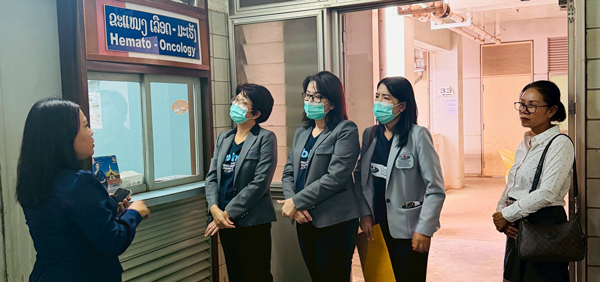
During our regional workshop on the JBI Evidence Implementation Framework in Lao PDR in October 2025, the primary focus was improving evidence-based pre-treatment assessments for chemotherapy patients.
However, as frontline nurses from Thailand and Lao PDR engaged in robust discussion about practice realities, a pressing concern emerged beyond traditional clinical protocols. While visiting sites, nurses reported that, while they struggled with staffing constraints and communication barriers, patients and their families were increasingly relying on online health information, social media and artificial intelligence (AI)-generated content to make treatment decisions.
‘In our busy wards, language and staffing are constant hurdles. But what worries us most now is seeing patients make life-altering cancer decisions based on unverified AI chatbots before they even sit down to talk with us.’
‘Patients often tell us they feel hesitant to interrupt because we look so busy, so they ask AI chatbots first before checking with us. I’m always thankful when they do come back to confirm what they’ve read. But what frightens me is the other side of the coin: What if they receive incorrect advice and act on it alone? What happens to their care then?’
‘Ovarian cancer patients and their families often turn to AI to search for medical information and interpret lab results before making treatment decisions.’
This key insight highlighted to us that while AI can democratise health knowledge, it can also spread misinformation, lack cultural context and deepen digital health inequities if patients navigate it alone.
To ensure evidence implementation truly serves people, our project places communities, patients and the public at the centre of AI-enabled EBHC. Pre-treatment assessment is no longer just a clinical checklist; it has become a vital partnership space where clinicians and patients work together to evaluate trustworthy evidence and safely navigate AI-generated health information.
AI and Evidence: Opportunity with Responsibility
Worldwide, AI tools are beginning to transform healthcare systems. From automated evidence synthesis to clinical decision support systems and patient education platforms, AI has enormous potential to make evidence more accessible and timely.
In cancer care, AI may eventually help healthcare professionals identify symptom risks earlier, support personalised treatment education or improve clinical workflows. Patients may also increasingly use AI-powered platforms to understand their symptoms, medications and side effects before attending hospital appointments. But there is also a growing concern. Patients can easily encounter misinformation, incomplete recommendations or non-contextualised advice generated by AI systems that do not fully understand local healthcare realities, language differences or cultural needs.
In lower-resource settings, digital inequities may further widen the gap between patients who can access trustworthy information and those who cannot. For this reason, our project emphasises that evidence implementation must remain human-centred.
The JBI Evidence Implementation Framework encourages healthcare teams to identify evidence–practice gaps, and importantly, understand the barriers, context and lived experiences surrounding care delivery. In our project, this means listening carefully to frontline nurses, multidisciplinary teams, patients and families before implementing changes. The goal is not simply to ‘introduce evidence’, but to build systems where evidence can be realistically applied, sustained and trusted.
Cross-Border Collaboration Creates Shared Learning
One of the most inspiring aspects of this project has been the partnership between institutions in Thailand and Lao PDR. Although the healthcare systems differ between these countries, many challenges are shared: the increasing cancer burden, workforce limitations, unequal access to specialist care and the need for standardised evidence-based assessment processes.
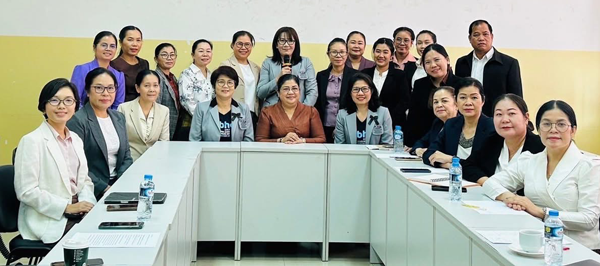
The workshop in Lao PDR created a safe and respectful environment for healthcare teams to exchange practical experiences. Participants discussed how evidence can be adapted to local contexts without losing scientific rigour. They also explored how future technologies, including AI-enabled healthcare tools, should support, not replace, clinical judgement, compassionate communication and patient engagement. Importantly, nurses were not treated merely as recipients of knowledge. They became co-creators of implementation strategies. This reflects one of the most important lessons from evidence implementation science: sustainable healthcare improvement happens when local teams have ownership of change.
Key Lessons Learned
1. Guideline Standardisation Is Not Enough
We assumed teaching the JBI Evidence Implementation Framework would seamlessly translate into clinical practice. However, using standard checklists wasn’t adequate when AI-generated mis/disinformation that patients brought with them to the clinic needed to be addressed and managed appropriately. Drawing on insights from cross-cultural adaptation and implementation and sustainability models, we recognized the need to shift toward integrating ‘patient information triage’ into pre-treatment assessments. What we need to do differently is to shift from rigid checklists to integrating ‘patient information triage’ into pre-treatment assessments, thereby empowering nurses to evaluate patient-sourced digital health information from day one
2. Underestimating the Digital Literacy and Context Gap
We expected digital and AI-enabled resources to democratise care equally. Instead, we encountered a double barrier: severe language/cultural disconnects in the use of AI tools and varying digital literacy among frontline staff. We learned that technology without local co-design widens health inequities. We now build community-led digital literacy initiatives before deploying digital tools to ensure patients and nurses co-create accessible content
3. Technology Can’t Replace Human Touch
We thought AI could deliver health education to patients, but cancer patients found automated responses unwelcoming and worrying during their treatment. We learned that while patients use AI for information, nurses should focus more time on listening, comforting and caring for patients in person
‘As artificial intelligence reshapes healthcare worldwide, keeping human hearts at the centre matters more than ever. When we walk alongside patients, families and communities as true partners, technology becomes a bridge rather than a barrier. This cross-border journey between Thailand and Lao PDR shows how compassion, shared hope and evidence-based science can come together to bring warmth, dignity and real comfort to cancer care.’
References
Lai, J., Maher, L., Li, C., Zhou, C., Alelayan, H., Fu, J., & Wu, Y. (2023). Translation and cross-cultural adaptation of the National Health Service Sustainability Model to the Chinese healthcare context. BMC Nursing, 22(1), 124. https://doi.org/10.1186/s12912-023-01293-x
Lai, J., Maher, L., Zhou, C., Zhou, Y., Li, C., Fu, J., Deng, S., Zhang, Y., Guo, Z., & Wu, Y. (2024). Psychometric testing of the Chinese National Health Service Sustainability Model as an instrument to assess innovation in Chinese nursing settings. International Journal of Nursing Practice, 30(3), e13214. https://doi.org/10.1111/ijn.13214
Porritt, K., McArthur, A., Lockwood, C., & Munn, Z. (2023). JBI’s approach to evidence implementation: A 7-phase process model to support and guide getting evidence into practice. JBI Evidence Implementation, 21(1), 3–13. https://doi.org/10.1097/xeb.0000000000000361
Stephenson, M. (2025). Evidence summary: Cancer chemotherapy: Pre-treatment patient assessment. JBI Best Practice, JBI-ES-1882-2. https://ovidsp.dc2.ovid.com/ovid-new-a/ovidweb.cgi?&S=f51107d0-8b75-40ee-be81-6fb6ea5ca978%7cmain&Link+Set=S.sh.19%7c1%7csl_190
Wu, Y., Li, W., Stephenson, M., Cong, W., & Zhou, C. (2020). Pre-treatment assessment for patients with breast cancer undergoing chemotherapy: A best practice implementation project. JBI Evidence Synthesis, 18(1), 212–223. https://doi.org/10.11124/jbisrir-d-19-00163
To link to this article - DOI: https://doi.org/10.70253/AXWK4443
Disclaimer
The views expressed in this World EBHC Day Blog, as well as any errors or omissions, are the sole responsibility of the author and do not represent the views of the World EBHC Day Steering Committee, Official Partners or Sponsors; nor does it imply endorsement by the aforementioned parties.