Development and implementation of flexible visitation policy for surgical intensive care unit
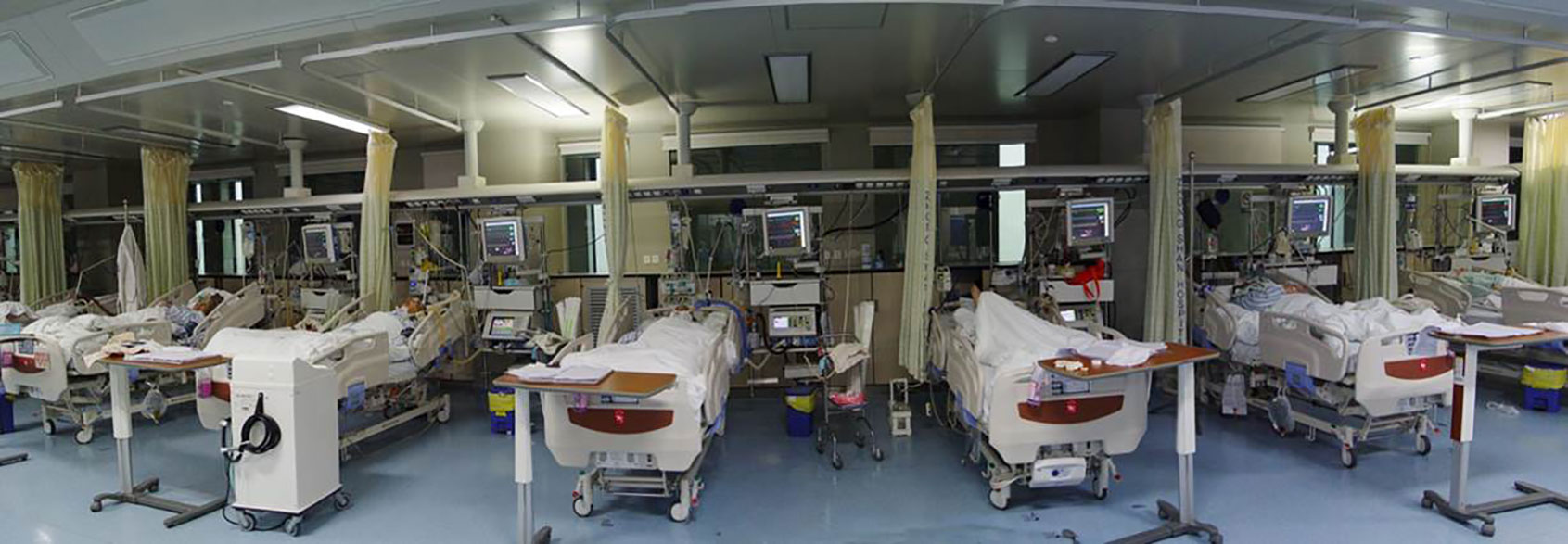
The intensive care unit (ICU) is a very complex environment, with advanced technologies and the likelihood of infectious complications. It’s a place where patients and families experience psychological stress during their stay.
Over the long term, discomfort experienced in the ICU and stressful memories of an ICU stay have been associated with the development of acute post-traumatic stress disorder–related syndromes, including anxiety, depression and impaired health-related quality of life. Having family visit is a positive experience for patients. The presence of family gives comfort, decreases the incidence of depression and anxiety, and improves the families’ satisfaction. However, most Chinese ICUs have a restrictive policy for family visits, in which visiting hours typically last from 15 minutes to 90 minutes.
Wenyan Pan is the head nurse of the surgical intensive care unit (SICU) in Zhongshan Hospital, Shanghai, PR China. The SICU in Zhongshan Hospital has 28 beds, 75 nurses and 15 physicians. Nearly 200 critically ill adult patients are admitted each month. Wenyan wanted to change the restrictive visitation policies in SICU and establish an open and flexible visitation policy. ‘The American Association of Critical-Care Nurses, American College of Critical Care Medicine and the Society of Critical Care Medicine published guidelines supporting open visitation policies’, Wenyan said.
Wenyan participated in the JBI Evidence Implementation Training Program in 2019 and, as part of the program, she developed an evidence implementation project that focused on creating and implementing a flexible visitation policy for SICU at Zhongshan Hospital. ‘The aim of my JBI evidence implementation project was to establish a domestic open and flexible visitation policy to meet patients and families’ needs, relieve patients’ loneliness and increase families’ satisfaction.’
The project aimed to:
- establish a visitation policy based on best practice;
- replace ICU staff practice with evidence-based practice;
- improve communication between family and ICU staff;
- improve experiences of critically ill patients in ICU (for example, by relieving loneliness and improving the satisfaction rates of families).
As part of her evidence-based project, Wenyan conducted a baseline clinical audit using the JBI approach and found that the hospital had no detailed policy outlining the processes and procedures regarding unrestricted visitation. Patients were not asked about their preferences for support persons, and families did not receive any guidance or relevant information from health professionals regarding flexible visitation processes. In addition, where patients were unable to communicate, there was no process in place for the family and/or hospital staff to choose the most appropriate support for the patient.
By adopting the best-available evidence and following the Getting Research into Practice (GRiP) approach, Wenyan employed a number of strategies to overcome the challenges to implementing evidence into practice; for example, she presented the evidence for a flexible and unrestricted visitation policy to the chief of critical care for buy-in from senior management.
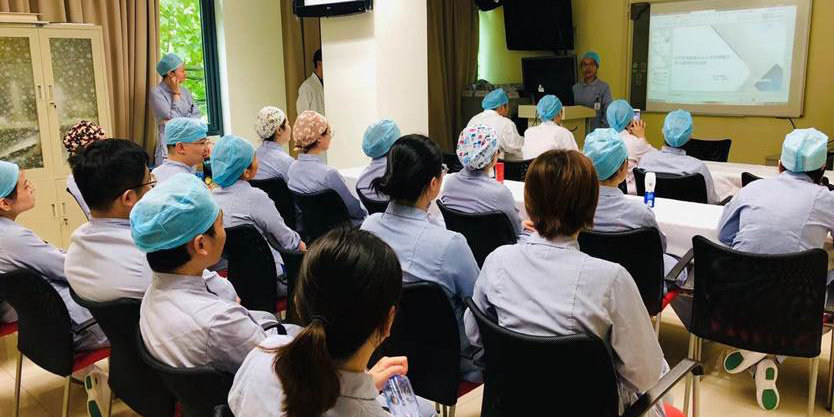
The next step was overcoming staff resistance to accepting the new visitation policy. Staff were concerned that families would interfere with their work and disrupt their work rhythm, and they were concerned about the increased risk of intra-hospital infection. To address these challenges Wenyan conducted seminars to educate staff on the benefits of flexible visitation to critically ill patients and their families.
To manage the risk of intra-hospital infection, a nurse was appointed to manage visiting procedures and a security guard was present during family visits. Lockers were also installed for families to store their belongings in while visiting the ICU. Job responsibilities were adjusted, and additional support staff were employed to assist family visitations.
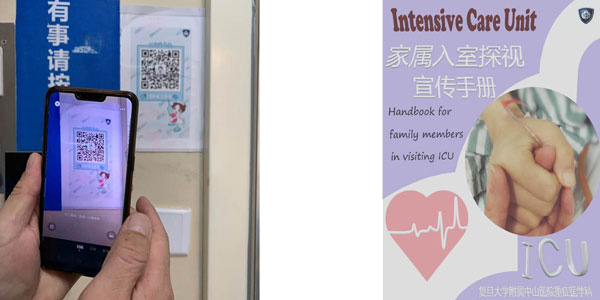
It was also important for Wenyan to educate the patients and families on the new policy and procedures. A WeChat account was created, where a monthly article on aspects of visiting the ICU was posted each month, and nurses provided families with a handbook prior to each visit.
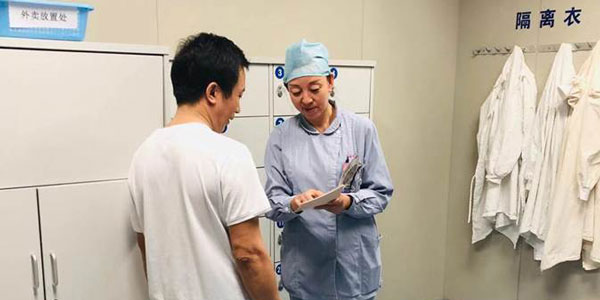
Wenyan introduced scenario simulation teaching sessions to build junior nurses’ communication skills, so that they could better understand the needs of the patients and their families in relation to family visits. She also established a ‘talking room’, a comfortable private room where nurses and families could communicate, which was implemented with the enthusiastic support of management, doctors and nurses at SICU.
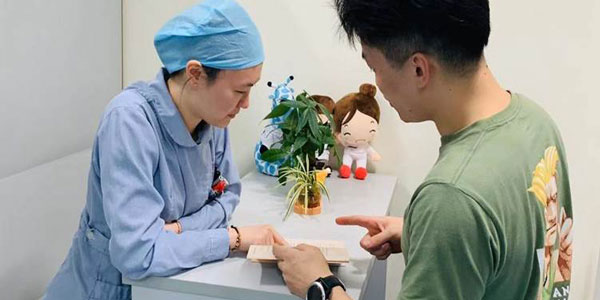
Wenyan’s implementation project to establish an open and flexible visitation policy resulted in changes to policy and practice within Zhongshan Hospital, and the increased satisfaction of patients and families. The newly established policy outlined the processes and procedures for choosing the support person (for example, a family member, friend or other trusted person), the period of visitation, the number of visitors and other related information.
After six months, a follow up audit demonstrated that compliance with patients being asked to choose their support person and decide how they would like to be involved in their care and decision-making reached 100%. Where patients were unable to communicate, the family and/or hospital staff chose the most appropriate support for the patient, and compliance with this reached 80%. The patients' loneliness score decreased by 10% and families’ satisfaction score increased by 24%.
Wenyan’s ability to build and lead a dedicated team was identified by her colleagues as the key to achieving change in this project. ‘Following six months of hard work by a cross-disciplinary team, this project was successfully implemented. I had an unforgettable experience of how evidence could change practice and benefit patients throughout the implementation of this project.’
The biggest challenge was the need to negotiate with multiple teams, such as hospital affair administrative staff, ICU doctors, nurses and hospital securities, each of which had their own agenda, but ultimately, the policy was supported by the chief of critical care and the director of nursing. The project’s initial success will be sustained by considering the increased workload for nurses, conducting regular group discussions about challenges and barriers, and garnering more support from other discipline teams. ‘This project implemented changes that are new to China. I hope to share the successful implementation strategies with other hospitals to help more patients and family members.’
Further resources
https://mp.weixin.qq.com/s/9kT1KJl9SDjwAEWohsospA
JBI Manual for Evidence Implementation (for GRiP approach)
Authors
Yan Hu1,3, Wenyan Pan2, Yu Chen1,3, Yuxia Zhang2, Yingfeng Zhou1,3, Zheng Zhu1,3, Weijie Xing1,3, Qi Zhang2
1. Fudan University EBN Centre: a JBI Centre of Excellence
2. Zhongshan Hospital Centre of Critical Care: a JBI Centre of Excellence
3. Fudan University, School of Nursing


Disclaimers
The views expressed in this this World EBHC Day Impact Story, as well as any errors or omissions, are the sole responsibility of the author and do not represent the views of the World EBHC Day Steering Committee, Official Partners or Sponsors; nor does it imply endorsement by the aforementioned parties.