Facilitating the dissemination of evidence-based practice: Cochrane Rehabilitation Blogshots translation
Rehabilitation is a health strategy aimed at enabling people with disability to reach and maintain their optimal physical, sensory, intellectual, psychological and social functional levels. It does so by providing them with the tools they need to attain independence and self-determination.
Cochrane Rehabilitation aims to ensure that all rehabilitation professionals can apply evidence-based clinical practice, combining the best available evidence from high quality Cochrane systematic reviews with their own clinical expertise and patients’ values and preferences.
Cochrane Rehabilitation has been signing memoranda of understanding in order to create partnerships with different groups, societies, universities, hospitals, journals and other rehabilitation stakeholders. Partners are defined according to their relationships with Cochrane Rehabilitation as hosting and financing; financing and strategic; strategic; journals; national societies; universities; hospitals; research centres; and other organisations.
It is a Cochrane Rehabilitation priority to share high quality health information in multiple languages. Translation is an essential mission and a key responsibility as only about 6% of the world’s population are native English speakers, and 75% of people don’t speak English at all. Many people do not have access to high quality health information because it is not readily available in a language they understand.
Translation enables easier knowledge dissemination, and allows evidence to become accessible in communities not familiar with the English language. Thus, we are able to reach a range of practitioners, including physicians, physiotherapists, occupational therapists, nurses, speech and language therapists, psychologists, orthotists and prosthetists, students, researchers, patients and their families, and health policy-makers.
The process of creating new translation partnerships starts with an initial contact by the field co-director. For each language, whenever possible, we seek to involve the National Society of Physical and Rehabilitation Medicine and the local Cochrane geographical group. These partnerships ensure the quality of translations and enable effective dissemination throughout the local communities.
After the partnership is established, the translation manager and the translation partners continue the work. The effectiveness of partnerships is achieved through regular and clear communication. Deadlines and objectives are set, but we understand that these partners are all volunteers and work as full-time clinicians, professors and researchers, so production times may need to be flexible.
The translated content that Cochrane Rehabilitation is currently producing are blogshots. They are a form of infographic: a single PowerPoint slide, saved and stored as an image, which presents key information from a single Cochrane Review. Blogshots are a practical, fast and useful source of information.
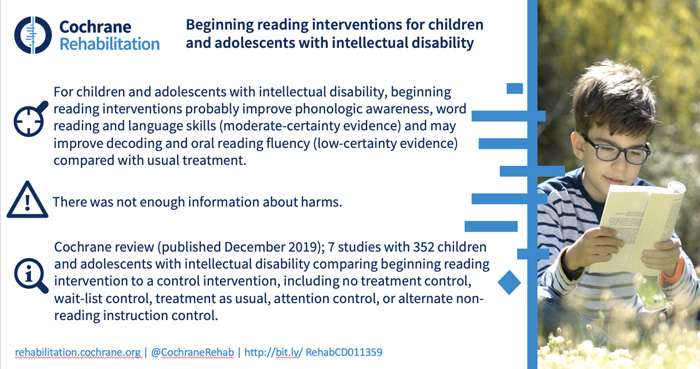
We are now translating our blogshots into nine languages: Dutch, French, Spanish, Italian, Hungarian, Croatian, German, Serbian, Polish. We are planning to start publishing translations in Chinese, Portuguese and Greek shortly, and are currently recruiting translation partners for these languages.
In order to disseminate translated blogshots, we are in contact with national societies of physical and rehabilitation medicine, and we also collaborate with international associations that support the development of rehabilitation care worldwide.
Blogshot translations are available on the Cochrane Rehabilitation website, social media, newsletters and Cochrane archives on Tumblr.
- https://cochraneblogshots.tumblr.com/tagged/rehab
- https://rehabilitation.cochrane.org/resources/blogshots
Future plans include increasing the number of languages translated and reaching Asian countries, since a very significant part of the world’s population is concentrated in this continent. After increasing the number of languages, we will broaden our translations beyond blogshots.
Key messages
- Translated blogshots can reach a huge number of scientists, rehabilitation healthcare professionals, patients and policy-makers.
- Partnerships with national societies, international associations and geographic groups ensure the quality of translations and their dissemination throughout the rehabilitation community.
- The success of partnerships is due to close collaboration and clear communication.
- Memoranda of understanding can be an effective strategy for creating commitment and securing new partnerships.
Disclaimer
The views expressed in this World EBHC Day Blog, as well as any errors or omissions, are the sole responsibility of the author and do not represent the views of the World EBHC Day Steering Committee, Official Partners or Sponsors; nor does it imply endorsement by the aforementioned parties.