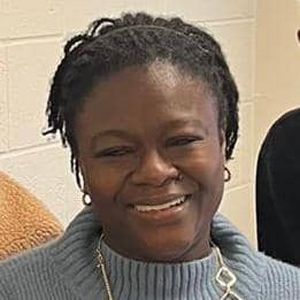
Collaborating across continents through the Cochrane US Mentoring Program
There are numerous mentorship programs within Cochrane that are focused on evidence-based healthcare, yet there are few that are specifically aimed at including participants from low-and middle-income countries. In 2021, the Cochrane US Network set out to design and implement a mentorship program aimed at reaching participants from historically marginalised settings.
The Cochrane Us Mentoring Program is a mentorship-based community that enables participants to become proficient in evidence synthesis and build a professional network beyond geographical borders. The main objective of this program is to allow individuals who may experience discrimination, lack of access to resources and materials, and often health inequity in their day-to-day lives to gain the skills and opportunities they need to succeed in health science and evidence-based healthcare. Eligibility criteria for the program includes participants who:
- live in/are from a low-resource setting
- are a single parent or caregiver
- live with consequences of climate change
- lack opportunities in evidence-based healthcare and medicine
- identify as LGBTQ+
- live with a disability
- come from historically marginalised populations, due to race, ethnicity and religion, etc.
- are a first-generation college student or graduate.
Having started with just nine mentees and four mentors in 2021, the mentorship program is currently starting its third year with 27 mentees and 17 mentees from 18 countries. In total, the program has served 63 mentees, and has received over 600 applications from 50+ countries over the three years.
My story
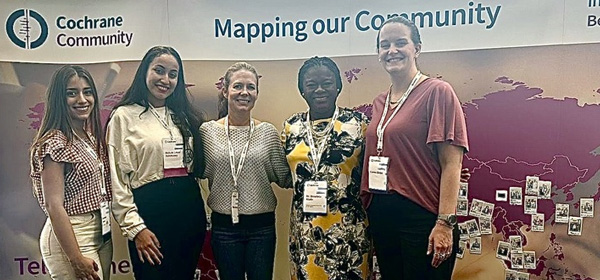
I was 15,000km southeast of my hometown of Ibadan, Nigeria, when I was first introduced to evidence synthesis during a graduate course on epidemiology at the University of Sydney, Australia. However, this was just the start of my journey.
Several years later, while I was working towards a PhD in Global Health from McMaster University in Canada, I came across the US Cochrane Network and joined their mentorship program. The skills and training that I received as a mentee gave me the opportunity to become an active contributor in evidence synthesis and take on a role as a mentor. Through this role, I collaborated on a review manuscript describing climate health education curricula for healthcare professionals; am nearing completion on a review of equity considerations in Cochrane systematic reviews of lifestyle interventions for cardiovascular health; and am leading a research project, with seven other mentees, on equity considerations in mentoring programs for healthcare research.
Back home in Nigeria, I am part of an inaugural collaborative initiative between my faculty at Obafemi Awolowo University and the Nigerian Institute of Medical Research to conduct several systematic reviews on oral health. I am also a mentor to the next generation of oral health researchers in evidence synthesis, mentoring three researchers in the first cohort of the National Oral Health for Development program of the Nigerian Institute of Medical Research. Although I have been on a journey spanning continents to get here, my story is far from finished and I hope to continue making a positive impact as I progress in my career.
Key learnings
The Cochrane US Mentoring Program has shown us that, in order to improve the availability, access and adoption of evidence synthesis, we require intentional effort and planning to train and engage students and early- and mid-career professionals from low- and middle-income countries, non-English speaking, and historically marginalised populations. The generosity and dedication of Cochrane US members have manifested in mentees receiving exciting opportunities to engage in training, workshops, internships, publications, webinars, reviews and more. However, in order to ensure continued success, we need to ensure we have the resources to do so.
Author
Omolola Alade and Tiffany Duque
Disclaimer
The views expressed in this World EBHC Day Blog, as well as any errors or omissions, are the sole responsibility of the author and do not represent the views of the World EBHC Day Steering Committee, Official Partners or Sponsors; nor does it imply endorsement by the aforementioned parties.