Helping children and adolescents with mental health problems by using the best evidence
Authors: Hongmei Zhang, Weihua Liu
Introduction
With increasing stress and competition at school, high parental expectations, and rapidly changing socio-economic conditions, mental health problems among children and adolescents are widespread. These problems can manifest in many diseases, including anxiety, depression, conduct disorders, eating disorders, hyperkinetic disorders, and self-harm. In severe cases, the problems can even lead to suicide. Such mental health problems affect daily life, and if left untreated, they will continue into adulthood.
Currently, the prevalence of mental disorders worldwide is 10% to 20% among children and adolescents. Anxiety and depression account for about 43% of these disorders. The prevalence in China is 17.5%, which is higher than that among adults (16.6%). It is estimated that at least 50 million children and adolescents in China struggle with emotional or behavioral problems. It is clear that mental health conditions have gradually become a major burden of disease for children and adolescents in China.
Multiple factors lead to mental problems among children and adolescents
The causes of mental health problems in children and adolescents are diverse and can be divided into four aspects:
1. Too much academic pressure. In China, there is an annual super examination called the National College Entrance Examination, also known as gaokao. Gaokao is of vital importance to students. Traditionally, it is regarded as a decisive exam for one’s fate. The score decides which domestic college a high school graduate will go to. To some extent, this system has resulted in Chinese parents’ cognitive rigidity, with the idea that life has no value or meaning if their child fails a certain test or task. This is an important factor in depression. Most Chinese parents impose too many of their own beliefs and ideas on their children. One high school student who experienced severe depression said that with the high academic expectations imposed by herself, the school, and the family, she felt “pressure rushing toward her like tidal waves.”
2. Dysfunctional family relationships. Family is the main influence that forms children’s and adolescents’ personality. Dysfunctional family relationships can take many forms. There are a thousand dynamics and challenges in a thousand families. Unhealthy patterns of behavior, poor communication, and unresolved conflicts are all manifestations of dysfunctional family relationships. Navigating a dysfunctional family environment is a challenge for children and adolescents. They often must face emotional upheaval, unpredictable dynamics, and a lack of consistent support. These factors can make them anxious and hyper-vigilant. They may develop low self-esteem, trust issues, or exhibit aggressive or withdrawn behaviors. There is no doubt that this will increase the incidence of mental health problems in children and adolescents.
3. Negative peer relationships. Peer relationships are an important indicator of mental health among children and adolescents. Negative peer relationships may have various effects, including physical and relational aggression, guilt, loneliness, and depression. Student relationships with other students are an important element of peer relationships. If the child or adolescent exhibits the following characteristics, it is likely that they are involved in a negative peer relationship:
- Always flattering the other student
- Always forced to obey the other student
- Often being ridiculed and despised
- Having low self-confidence, depression, and sadness most of the time.
Other factors. In addition to the above three factors, other factors that may lead to children's and adolescents’ mental health problems, such as internet addiction, physiological factors, and cultural factors. Physiological factors can occur in children of older mothers, children whose parents have hereditary mental illness, children who were born prematurely, etc. With regard to cultural factors, Chinese people may be relatively restrained and reserved, and expressing emotions, especially negative emotions, is discouraged. Lastly, the child's or adolescents’ own personality could also contribute to the mental health problems.
Current areas of focus to improve mental health
Lu Ying, a core staff member at our center, the Henan Evidence-based Nursing Centre: A JBI Affiliated Group, is a psychotherapist. She works on mental health issues with Chang Shuying, who is also a psychotherapist. Chang has nearly 20 years of experience in psychological counseling, especially with children and adolescents. Together with other nurses, Chang and Lu make up the mental health team at our center. The team works with three key populations: medical staff; inpatients; and children and adolescents.
1. Medical staff: We developed a three-stage online intervention program to respond to the psychological crisis in medical staff. The three stages are: primary for all; secondary for subnormal; and tertiary for diagnosed. Research data show that the program is effective in reducing negative emotions and somatic symptoms, thereby improving the mental health of frontline nurses.
2. Inpatients: The team organizes regular group activities for inpatients to reduce anxiety, depression, and fear. The activities aim to help inpatients gain confidence in their fight against mental illness. They also help to establish harmonious doctor-patient relationships. In the future, we plan to embed a psychological screening scale into the hospital information system to assess all inpatients upon admission.
3. Children and adolescents: With this population, the team’s main focus is to prevent and manage non-suicidal self-injury behavior. We conduct individual consultations in outpatient clinics for children and adolescents with mental health problems. In addition, we also hold regular activities for gaokao students.
Future areas of focus to improve mental health
Despite numerous efforts to promote mental health among children and adolescents, the best evidence is rarely applied in this field. At our center, we only initiated evidence-based nursing practice in 2020. However, by 2024, our hospital had conducted 50 evidence-based nursing practice projects and accumulated a wealth of experience. The best evidence can help medical staff to care for patients efficiently and scientifically. The next steps will involve adopting evidence-based practices to address mental health problems in children and adolescents.
Compared with adults, young people tend not to seek help for mental health problems due to fears about confidentiality and public stigma. Other factors include peer pressure, the desire to be self-reliant, and a lack of awareness of mental health problems and mental health services. In the future, we plan to prioritize this aspect by using the best available evidence to increase children’s and adolescents’ engagement. We will achieve this through a process of evidence synthesis, transfer, and implementation.
Learning how to open up is the key to the prevention and treatment of mental health disorders. From the above analysis, we can see that numerous factors cause mental health problems among children and adolescents. School and family are equally important in this regard. In China, hospitals generally play the leading role in controlling disease. However, in relation to mental health, this model needs to be rebuilt. The hospital must work together with the family and school to jointly develop strategies. A community that is “mental health friendly” will encourage children and adolescents to speak out. In this way, we hope to establish a supportive environment in which patients feel comfortable to make their voice heard.

Figure 1. Part of the mental health team and Hongmei Zhang
(Front row, third from the left, Chang Shuying; front row, second from the right, Lu Ying)
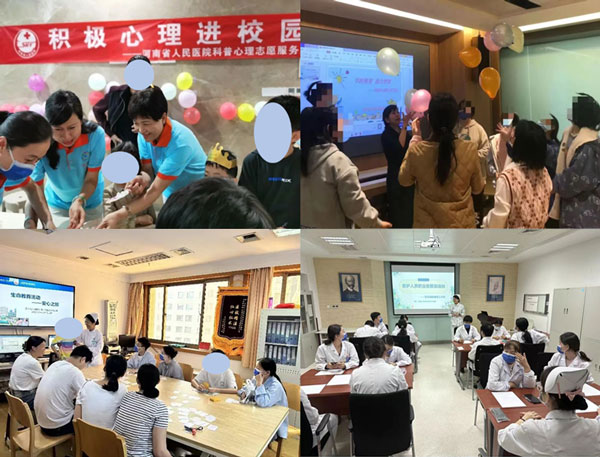
Figure 2. Group activities organized by the mental health team
To link to this article - DOI: https://doi.org/10.70253/KUSI6998
Disclaimer
The views expressed in this World EBHC Day Blog, as well as any errors or omissions, are the sole responsibility of the author and do not represent the views of the World EBHC Day Steering Committee, Official Partners or Sponsors; nor does it imply endorsement by the aforementioned parties.