Lights, camera, lifesaver: Henan Nurses serve evidence one click at a time
Authors: Hongmei Zhang and Weihua Liu
Henan is a land of wheat plains and mountain hamlets, home to 100 million voices who speak in village dialects and end their days with soil beneath their fingernails. Newspapers have long been replaced by the soft glow of smartphone screens, unlocked at dawn, during breaks, over meals and before bed – whenever a moment of free time appears. Convinced that evidence trapped on library shelves would never outrun disease, the Nursing Department of Henan Provincial People’s Hospital stepped into the digital world. Now, 60-second reels, live streams and pop-up clinics transport that evidence from journals to leek fields, from conference halls to hen-house chats.
60-second blockbuster
Rule of thumb: if a grandma who never finished school can’t act after one viewing, we re-shoot. At the 2025 provincial ‘5.12 Nursing TikTok Contest’ we entered 70 micro-films and won 11 awards from 3,025 entries. Our heat-stroke ‘blockbuster’ stars Qiu Hui, a charge nurse from the Emergency ICU at our North Campus, in deep-green scrubs, 40 °C (104°F) oven heat. In plain words, she summarises the illness down to three take-aways: cool down, drink water (never iced) and – most importantly – ‘don't wait even one second’ to call for help. Three crisp commands, zero jargon, 60 seconds that save lives.
Live from the living room
As the sun sets, phones light up once more – ‘Century-Old Provincial Hospital Health Live’ is on air. Every Tuesday and Thursday, nurses and doctors tackle one topic per session, covering whatever viewers want to know. Questions like ‘What should diabetics eat?’ or ‘Is a drooping face an emergency?’ pop up in the chat – and are answered in kitchen-table language before the noodles finish boiling. The replay becomes next week’s outpatient FAQ: research translated, peer-reviewed and grandma-approved – all in half an hour.
Face-to-face, hand-to-hand
Screens open minds, but touch seals memory. Our outreach team sets up small tables and pulls out manikins in stadiums, city squares and village roads: teachers and students practice CPR on the model; mums master the Heimlich manoeuvre in minutes. We show grandparents how to register on the hospital app and how to read a drug label – skills too big for a prescription slip, yet etched into muscle memory after one hands-on rehearsal.
‘Collaborative Knowledge Communication’, for us, is far more than a catchy slogan. It is the moment when a message to ‘cool down, drink water, get to the ER’ is acted on by a farmer 200 kilometres away and saves his work-mate. It is the trucker who trusts the stranger in scrubs because he first saw her face on his phone. And it is every viewer who finally realises that evidence is not locked behind journal pay-walls – it is filmed, shared and lived by people who look and speak exactly like them.
The road ahead
Evidence only works when people can use it. By pairing 60-second reels with 30-minute livestreams and zero-minute hallway consults, Henan nurses have turned Collaborative Knowledge Communication from a conference buzz-word into daily workflow. The fields are wide, the dialects many, the phones ever-present; our cameras stay charged and the next life to save is only one share button away.
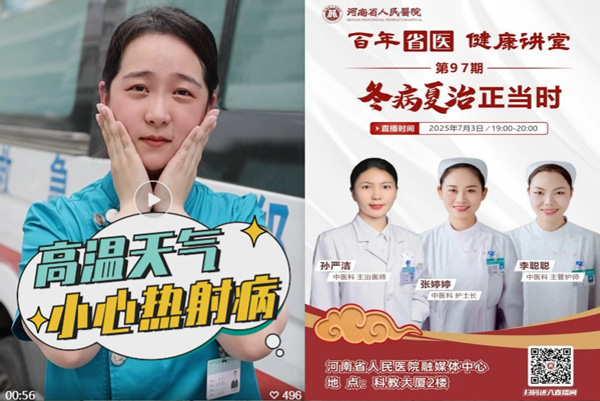
Image (left): Qiu Hui, Charge Nurse from the Emergency ICU at our North Campus, in ‘Hot Weather: Beware of Heat Stroke’. Watch the video on TikTok here!
Image (right): Session 97 ‘Winter Diseases Treated in Summer’, featuring physicians and nurses from Traditional Chinese Medicine.
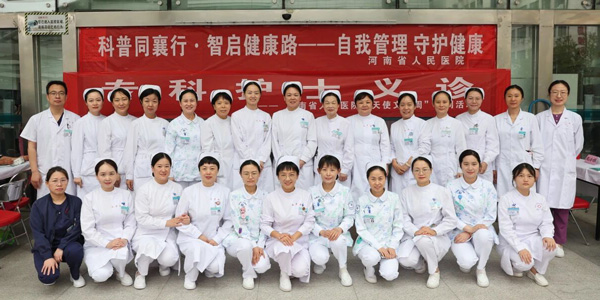
Image: Some members of our outreach nursing team during a charity clinic.
To link to this article - DOI: https://doi.org/10.70253/DLUT7937
Disclaimer
The views expressed in this World EBHC Day Blog, as well as any errors or omissions, are the sole responsibility of the author and do not represent the views of the World EBHC Day Steering Committee, Official Partners or Sponsors; nor does it imply endorsement by the aforementioned parties.