Strengthening Maternal Health through SBCC Interventions in Rural Ethiopia
Authors: Lakew Abebe Gebretsadik1,2 and Sudhakar Morankar1, 2
1. Department of Health, Behaviour and Society
2. Ethiopian Evidence Based Healthcare and Development Centre, Faculty of Public Health, Institute of Health, Jimma University, Jimma, Ethiopia
Introduction
Maternal mortality remains one of the most pressing global health challenges, highlighting deep inequalities between wealthy and low-income nations. Each year, hundreds of thousands of women die from preventable complications of pregnancy and childbirth, with most deaths occurring in resource-limited settings. Despite progress in many regions, sub-Saharan Africa continues to account for a disproportionate share of maternal deaths.
Ethiopia has achieved notable gains in maternal health over the past two decades, yet rural women remain at greater risk than those in cities. Studies from 2010 to 2015 showed that education, household wealth and distance to facilities strongly influenced maternal health service use, leaving rural women at a disadvantage1,2 Addressing these gaps requires not only expanding health services but also respecting cultural traditions and community realities.
This blog highlights an initiative in Jimma Zone, Ethiopia, that used Social and Behaviour Change Communication (SBCC) to promote institutional childbirth. By engaging trusted community leaders and linking them with formal health systems, the project demonstrates a scalable model for reducing maternal deaths in low-resource settings.3
Background
Ethiopia’s government has shown strong commitment to maternal health through initiatives such as the Health Sector Transformation Plan and the expansion of the Health Extension Program. Investments in infrastructure and workforce development have contributed to a steady decline in maternal mortality.
Yet, rural areas remain disadvantaged when it comes to antenatal care, skilled delivery and postpartum services. Women face barriers such as long distances to facilities, doubts about modern healthcare and reliance on traditional practices. Religious leaders, despite their strong influence in shaping community values, have often been overlooked as health partners.3
The Innovating Maternal and Child Health in Africa (IMCHA) initiative sought to bridge this gap by engaging both religious and grassroots leaders. The aim was not only to increase use of services but also to address the cultural attitudes that influence decisions around childbirth.3
The problem
At the beginning of the project, maternal health indicators in rural Jimma Zone were alarmingly low. The majority of births took place at home, often with untrained attendants, leaving women vulnerable to life-threatening complications such as haemorrhage, infection or prolonged labour.
Knowledge about these risks was limited and in many cases, cultural or religious beliefs reinforced the preference for home births.4 Families also faced challenges such as financial constraints, long travel distances and mistrust of health facilities. These realities showed that improving infrastructure alone was not enough. Any meaningful progress would require addressing the social, cultural and behavioural factors that shaped women’s choices about where to give birth.
The search for answers
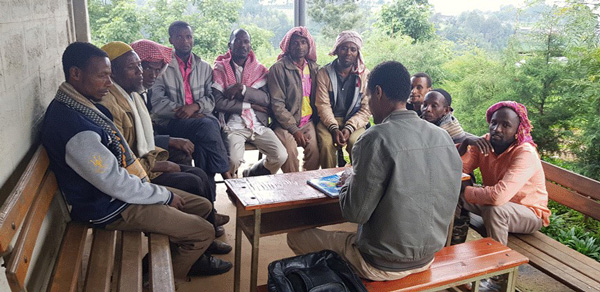
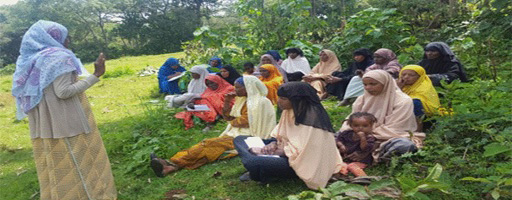
The IMCHA project focused on a central question: how could deeply rooted beliefs around childbirth be shifted toward greater acceptance of institutional delivery? The answer lay in a community-centred approach. Religious leaders, Women’s Development Army members and health extension workers were identified as trusted local partners. Together, they promoted maternal health through culturally sensitive messages grounded in both medical knowledge and community values.4 This approach went beyond simply sharing information. It emphasised dialogue, listening and co-creating solutions that communities felt they owned. This sense of ownership made the changes more likely to last beyond the life of the project.
Outcomes
The impact was clear. Within just two years, the proportion of women delivering in health facilities rose from 51% to 71%.5 This shift reflected not only increased service use but also stronger trust in healthcare providers. Religious leaders emerged as powerful advocates. By incorporating maternal health messages into sermons, they reframed institutional childbirth as both a moral responsibility and a life-saving choice. The number of leaders promoting facility births grew by 35%.4 Women’s engagement with the healthcare system also improved. The average number of antenatal visits per mother rose to four, increasing opportunities for early detection of complications. Ambulance use for emergencies increased to 23%, signaling greater preparedness and reliance on formal health services. Women reported greater awareness of danger signs, the importance of skilled care and what to expect after childbirth. These outcomes highlighted how community-driven communication could reshape not only practices but also attitudes around maternal health.
Challenges and lessons learned
The journey was not without challenges. Some religious leaders initially resisted, arguing that birth outcomes were solely determined by God. Patient dialogue and reframing maternal health as a sacred duty to protect life helped shift these views.4
Geography also posed barriers. Poor roads and long distances prevented some women from reaching facilities, even when they wanted to. This underlined the need to pair awareness campaigns with better transport and referral systems.3
Another challenge was sustaining the change. Without ongoing reinforcement, communities risked slipping back into traditional practices. Embedding maternal health promotion within existing community structures proved essential to maintaining momentum.
Key lessons included the importance of aligning health messages with cultural beliefs, building trust through open dialogue, strengthening collaborations across sectors and remaining flexible to community feedback.
Next steps
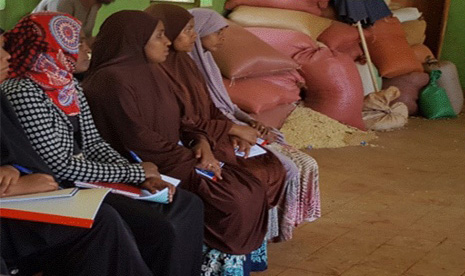
From the beginning, sustainability was a priority. Training for religious and community leaders now includes maternal health, ensuring they continue their advocacy.4 Partnerships with government bodies and NGOs have also been established to provide support beyond the project’s timeline. Plans are underway to scale this model to other parts of Ethiopia, with adaptations to fit local cultures while keeping core strategies intact.5 Policy advocacy is also progressing, aiming to formally include community and religious leaders in national maternal and child health strategies. By embedding these roles in policy frameworks, safe motherhood becomes part of a national standard, not just a temporary project outcome.
Key take-home messages
The Jimma Zone experience demonstrates that real improvements in maternal health are possible when communities are at the center of change.
Religious leaders, Women’s Development Army members and health extension workers together created a trusted network to promote safe childbirth.
Culturally sensitive SBCC strategies reshaped not just individual choices but also broader community attitudes and behaviors.
Addressing maternal health requires a holistic approach that tackles cultural, logistical and systemic barriers simultaneously.
Most importantly, sustainable change depends on integrating interventions into community structures and national policies. Behaviour change is not a one-time event—it requires ongoing dialogue, reinforcement and collective ownership.
References
Tarekegn, S. M., Lieberman, L. S., & Giedraitis, V. (2014). Determinants of maternal health service utilization in Ethiopia: Analysis of the 2011 Ethiopian Demographic and Health Survey. BMC Pregnancy and Childbirth, 14(1). https://doi.org/10.1186/1471-2393-14-161
Central Statistical Agency (CSA) Ethiopia and ICF International. (2012). Ethiopia Demographic and Health Survey 2011. CSA and ICF International. Available from: https://dhsprogram.com/publications/publication-fr255-dhs-final-reports.cfm
Gebretsadik, L. A., Lakew, F., Mamo, A., Abera, M., Bediru, K. H., Bulcha, G., Birhanu, Z., & Morankar, S. (2024b). Barriers to use of institutional childbirth services: A qualitative study in the rural Jimma Zone, Ethiopia. African Journal of Midwifery and Women's Health, 18(2), 1–14. https://doi.org/10.12968/ajmw.2023.0007
Gebretsadik, L. A., Mamo, A., Abera, M., Bediru, K. H., Bulcha, G., Koricha, Z. B., & Morankar, S. (2024a). The involvement of religious leaders in supporting institutional childbirth in rural Jimma Zone, Oromia, Southwest Ethiopia: An exploratory qualitative study. Journal of Religion and Health, 63(6), 4623–4640. https://doi.org/10.1007/s10943-024-02151-z
Gebretsadik, L. A., Mamo, A., Koricha, Z. B., & Morankar, S. (2025). Effectiveness of targeted social and behavior change communication on maternal health knowledge, attitudes and institutional childbirth: A cluster-randomized trial in Jimma Zone, Ethiopia. European Journal of Public Health. https://doi.org/10.1093/eurpub/ckae220
To link to this article - DOI: https://doi.org/10.70253/UIHI3684
Links to additional resources
Watch the Safe Motherhood Research Project documentary: The Safe Motherhood Research Project - Teaser on Vimeo
Disclaimer
The views expressed in this World EBHC Day Blog, as well as any errors or omissions, are the sole responsibility of the author and do not represent the views of the World EBHC Day Steering Committee, Official Partners or Sponsors; nor does it imply endorsement by the aforementioned parties.