When holistic care touches the sole
Authors: Dr SF Phoenix Tsay, Dr Roger Yau
JBI Taiwan Center for Holistic Care and Evidence Implementation; Department of Nursing and Health Care, Ministry of Health and Welfare, Taiwan; School of Nursing, National Taiwan University, Taipei, Taiwan; China Medical University, Taiwan.
Introduction
When holistic care touches the sole, it reminds us that nursing is not only about treating disease but also about easing suffering and promoting wellbeing in ways that connect body, mind and spirit. In Taiwan, foot reflexology is becoming part of this broader conversation about holistic health. Beyond its role as a complementary therapy, it embodies wellness traditions that are familiar to Taiwanese patients.
The modern story of foot reflexology began in 1979, when Father Josef Eugster introduced the practice, drawing on community experience and earlier literature, such as Good Health for the Future by Hedi Masafret (1976). A new chapter opened in 2020, at the beginning of the COVID-19 pandemic, when I, as Director of the Department of Nursing and Health Care at the Ministry of Health and Welfare, met Father Josef Eugster. Inspired by this encounter, I began exploring how reflexology could enter Taiwan’s nursing system. Since then, it has featured in Taiwan’s push for non-pharmacological, nurse-led options.
Cancer care is one area where the potential benefits of foot reflexology are being tested. Pain remains one of the most distressing and persistent symptoms for patients. The evidence points to foot reflexology as a safe and supportive option that can ease pain and anxiety. However, this raises the broader question of how can a culturally rooted practice like foot reflexology be rigorously evaluated, integrated into evidence-based healthcare (EBHC) and communicated in ways that resonate with patients, nurses and policymakers alike?
This blog reflects on Taiwan’s efforts to answer that question. Drawing on the evidence from cancer care, together with the development of Taiwan’s Holistic Nursing framework, we share lessons on how tradition and science can be brought together through collaborative knowledge communication to support patient-centred, evidence-informed and holistic practice.
Background: Foot reflexology in holistic care
Foot reflexology is practiced worldwide, and while techniques differ, most focus on reflex zones on the feet. Among the many fields where it has been applied, cancer care stands out as one of the most important. Pain is among the most distressing symptoms for patients and there is growing recognition that non-pharmacological options may help improve comfort and quality of life. Foot reflexology has been studied internationally in this context, with effects differing by setting and provider training. In Taiwan, an umbrella review was conducted highlighting potential benefits and current gaps.
Alongside evidence synthesis, efforts have also been made to prepare the ground for practice. Along one path, systems for training, promotion and credentialing have been developed. On the other path, studies have explored the effectiveness of foot reflexology in specific contexts, such as cancer care.
Problem: Persistent pain and uncertain evidence
Despite advances in cancer treatment, recent evidence shows that 44.5% of patients continue to experience pain, with nearly one in three reporting moderate to severe pain. This underscores the need for supportive interventions that increase comfort, alongside conventional care.
Small trials report reductions in cancer-related pain and anxiety. Yet the evidence base remains limited. The challenge, then, is twofold: to strengthen the quality and certainty of the evidence and to find ways of communicating its potential and limitations clearly to patients, nurses and policymakers. Without both, promising complementary practices risk either being overlooked or being adopted without sufficient safeguards, leaving patients caught between hope and uncertainty.
The search for answers
Learning from the evidence
To address the problem of poor pain control in cancer, we began with the published evidence. An umbrella review synthesised three systematic reviews, such as a 2024 review published in BMC Complementary Medicine and Therapies, covering 14 studies on patients with cancer. The findings pointed to consistent reductions in cancer pain, especially in post-operative and palliative settings, and greater effects when interventions were delivered by trained nurses. No adverse effects were reported, reinforcing the safety of foot reflexology as a non-invasive option. A recent randomised trial with leukemia patients reported similar benefits.
Building pathways for practice
At the same time, Taiwan recognised that evidence alone would not be enough. Since 2020, the Department of Nursing and Health Care at the Ministry of Health and Welfare has supported initiatives such as training programs for nurses, caregiver education and the creation of credentialing pathways. For many nurses, these programs also expanded their professional scope, enabling them to support patients in more holistic ways.
Collaborative knowledge communication in action
Bringing complementary practices into healthcare is not only a matter of research or training—it also depends on how knowledge is shared and communicated. The JBI Taiwan Center for Holistic Care and Evidence Implementation has supported dialogue between nurses, researchers and policymakers, turning guidance into ward-level routines. At the 2024 International Forum on Holistic Nursing in Geneva, Taiwan joined colleagues from Denmark, Sweden, Norway, the United Kingdom and the United States to discuss integrative health. Reflexology was presented as a case of how cultural traditions can be examined with global evidence.
A framework for caring and healing
Underlying these initiatives is the Holistic Nursing Framework that I developed. This model guides nursing practice, education and policy by emphasising that care extends beyond treating disease—it integrates physical, emotional, social and spiritual dimensions of health. Applied to foot reflexology, the framework highlights the following:
- For nurses: training enhances autonomy, holistic competence and evidence-informed practice.
- For patients: reflexology supports pain relief, emotional balance and self-healing.
- At the core: caring and healing reflect how philosophy and evidence can come together in practice.
Taken together, this justified continuing nurse-led use within research and training. It respects cultural values, empowers nurses and responds to patients’ needs in ways that strengthen the entire system of care.
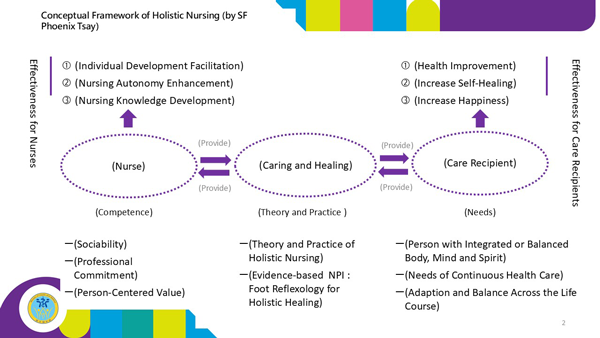
Figure 1. Holistic Nursing Framework developed by SF Phoenix Tsay
Results and outcomes
Clarifying the evidence
The umbrella review brought greater clarity as to what foot reflexology can and cannot yet offer in cancer care. By examining existing systematic reviews, it demonstrated consistent pain relief, especially in post-operative and palliative contexts, while also underscoring the limits of the current evidence base. Importantly, it confirmed the safety of the practice and highlighted the added value of trained nurses delivering the intervention. These findings positioned foot reflexology as a credible candidate for further research and integration, rather than a practice to be dismissed outright.
Preparing the workforce
Parallel to the growth of the evidence base, practical systems have been put in place. Training programs, caregiver education and credentialing pathways have given nurses structured opportunities to build competence in foot reflexology as part of holistic care. This has expanded their scope and ensured standardised, nurse-led practice.
Sharing on the global stage
The progress made in Taiwan has also reached international audiences. At the 2024 International Forum on Holistic Nursing in Geneva, foot reflexology was presented as a case study of how cultural practices can be examined within EBHC. This built on years of nurse training, policy dialogue and international exchange. Since learning the method myself, I have had the opportunity to lead training and promotion activities, publish books in both Chinese and English (Holistic Nursing: What the Feet Can Tell) and convene workshops with international experts. I have also shared experiences abroad, including visits to Japan, Denmark, the United States and the United Kingdom. Together, these efforts show Taiwan’s role in global conversations on integrating complementary care.
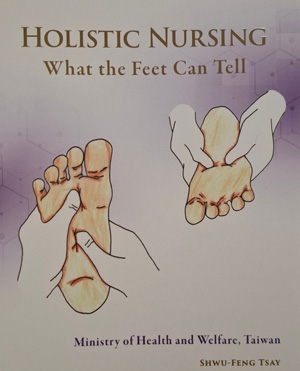
Figure 2. Cover of the book, Holistic Nursing: What the Feet Can Tell.
Challenges, obstacles and lessons learned
Challenges in practice and systems
Standardising protocols across busy wards has been a hurdle. Credentialing pathways helped, but nurses face heavy workloads and integration must be managed carefully.
Lessons learned
From these challenges, several lessons have emerged. First, complementary practices require both an evidence path and a system path: research to test their effectiveness and parallel workforce preparation so that safe care can be delivered when evidence matures.
Second, collaborative knowledge communication has proven vital. Open dialogue with policymakers, patients and international colleagues has helped to position foot reflexology not as an alternative to science but as a tradition that can be critically examined within EBHC.
Finally, framing foot reflexology through the Holistic Nursing Framework has provided a unifying model that bridges evidence, cultural values and patient-centred care.
Next Steps
The journey of integrating foot reflexology into EBHC is still underway. We are aiming for multi-site, nurse-led RCTs that use standardised protocols and outcomes. However, progress depends on collaboration beyond Taiwan to refine research questions and share lessons about implementation.
Finally, the Holistic Nursing Framework will continue to guide this work, reminding us that evidence alone does not heal—healing happens when science, culture and caring are brought together in practice.
Key Take Home Message
- Foot reflexology shows promise in cancer care but requires stronger evidence.
- Preparing the workforce in parallel with building evidence is critical.
- Collaborative knowledge communication bridges tradition and science.
- The Holistic Nursing Framework provides a model for integrating complementary practices.
- Taiwan’s experience shows how EBHC can respect cultural values while remaining rigorous.
REFERENCES
Klaus, M., Kutschan, S., Männle, H., Hübner, J., & Dörfler, J. (2024). Reflexology in oncological treatment: A systematic review. BMC Complementary Medicine and Therapies, 24(1), 32.
Masafret, H. (1976). Good health for the future. Trema.
Mehri, M., Golitaleb, M., Safdari, A., Madadi, S., Rafiei, F., Shahbazi, H., ... & Nejat, N. (2025). Effect of foot reflexology on pain, anxiety and physiological indices in leukemia patients undergoing bone marrow aspiration: A randomized clinical trial study. Contemporary Clinical Trials Communications, 44, 101427.
Ministry of Health and Welfare, Department of Nursing and Health Care. (2024, May 29). International Forum on Integrative Health: Navigating the Future of Holistic Care and Well-being, Geneva. Available from: https://www.mohw.gov.tw/cp-6657-78904-2.html
Snijders, R. A. H., Brom, L., Theunissen, M., & van den Beuken-van Everdingen, M. H. J. (2023). Update on prevalence of pain in patients with cancer: A systematic literature review and meta-analysis. Cancers, 15(3), 591.
Tsay, S.-F., & Hu, C.-W. (2022). Holistic nursing: What the feet can tell (1st ed.). Wu Nan.
To link to this article - DOI: https://doi.org/10.70253/PYYK3144
Disclaimer
The views expressed in this World EBHC Day Blog, as well as any errors or omissions, are the sole responsibility of the author and do not represent the views of the World EBHC Day Steering Committee, Official Partners or Sponsors; nor does it imply endorsement by the aforementioned parties.